
The debt snowball is a payoff method where you attack your smallest debt first, regardless of interest rate. Mathematicians will tell you it is wrong. People who escaped debt will tell you it works. Both are right - here is why, with numbers.
List every debt from smallest balance to largest - credit cards, personal loans, EMIs, everything except possibly your home loan. Pay the minimum on all of them, and throw every spare rupee at the smallest one. When it dies, take the full amount you were paying on it and add it to the attack on the next smallest. That growing payment is the snowball.
Say you owe: a 18,000 store card at 36%, a 75,000 personal loan at 14%, and a 2,40,000 car loan at 9%. Minimums total 9,500 a month and you can free another 5,000. The snowball sends those 5,000 to the store card, killing it in about four months. Then its minimum plus the 5,000 - now roughly 7,200 - rolls into the personal loan.
The avalanche method (highest interest first) costs less in total interest - that is just arithmetic. If the store card above were 18% and the personal loan 36%, avalanche would reverse the order and save money.
But debt payoff is a behaviour problem wearing a maths costume. Most plans fail in month three or four, when motivation runs dry and there is nothing to show for the effort. The snowball engineers an early win: one account closed, one minimum payment gone forever, proof that the plan works. That psychological fuel is why study after study finds snowball users more likely to actually finish. A slightly more expensive plan you complete beats the optimal plan you abandon.
Pick snowball if: your debts vary a lot in size, you have felt discouraged before, or you need visible progress to stay consistent. Pick avalanche if: your balances are similar, the interest-rate gap between debts is large (a 36% card versus a 12% loan), or you are the kind of person who finds efficiency itself motivating.
The unglamorous truth: the difference between the two methods on a typical middle-class debt pile is often a few thousand rupees of interest. The difference between either method and no plan is years of payments. Choose whichever you will still be following in December.
Write down every debt: balance, interest rate, minimum payment, due date. Order them smallest to largest. Decide your monthly attack amount - the spare money beyond minimums, even 2,000 counts. Automate the minimums so a missed date never burns you, and schedule the extra payment right after payday.
Our debt payoff spreadsheet does this setup for you: it lists your debts, lets you pick snowball or avalanche, and shows the month-by-month schedule with your debt-free date on top. Watching that date pull closer is the other half of the motivation.
Snowball pays the smallest balance first for quick wins; avalanche pays the highest interest rate first for the lowest total cost. Snowball usually finishes more often; avalanche usually costs a bit less.
Usually no. Long, low-interest secured loans play by different rules; most people snowball consumer debt (cards, personal loans, EMIs) and keep the home loan on its normal schedule.
Then the first job is finding the extra: one cancelled subscription, one freelance weekend, one sold unused thing. Even 1,000 extra a month shortens a small debt's life by months.
the debt payoff spreadsheet · a monthly budget to find the extra money · all budget templates

How to use Google Sheets from zero: cells, formulas, formatting and sharing, explained with small real examples. No jargon, no prior Excel needed.
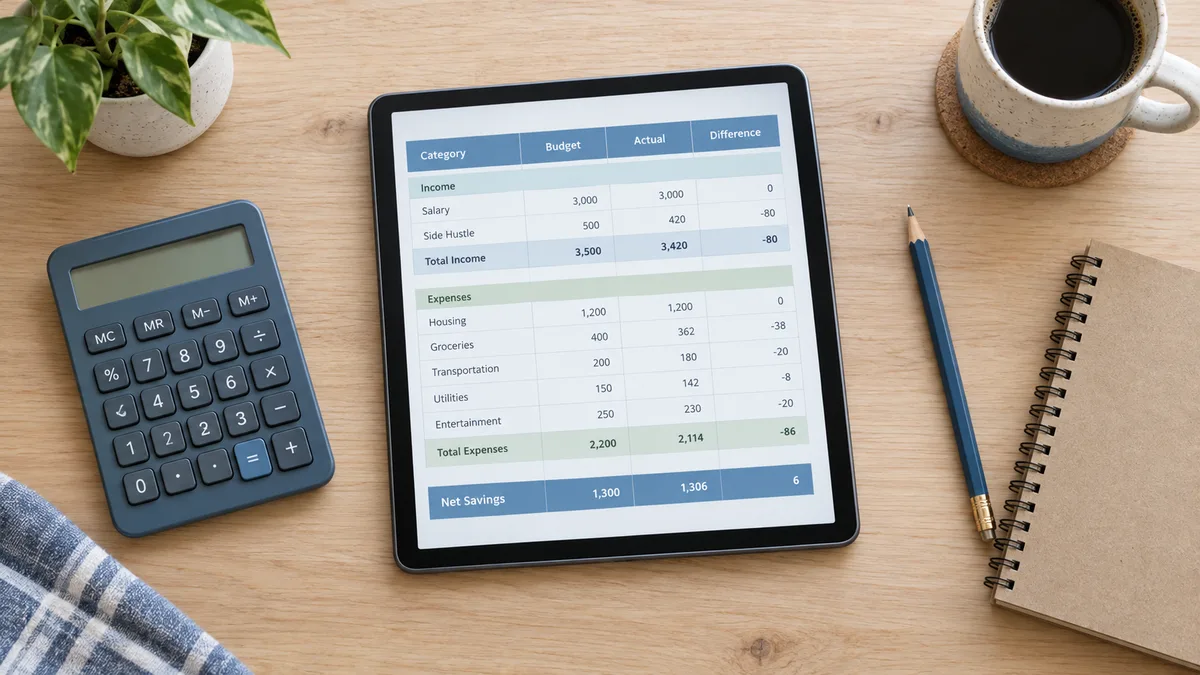
How to make a spreadsheet from a blank grid: plan the columns, add formulas, format it clean, and turn it into a reusable template. A 15-minute build.